


The first and only FDA-approved PROTAC
Discover what differentiates the mechanism of VEPPANU
VEPPANU works differently
Current endocrine-based treatments commonly used for metastatic breast cancer (mBC) block estrogen production, a main driver of mBC. VEPPANU works differently by harnessing the cell’s own protein disposal system to directly target and remove estrogen receptors (ERs) that cause cancer to grow.
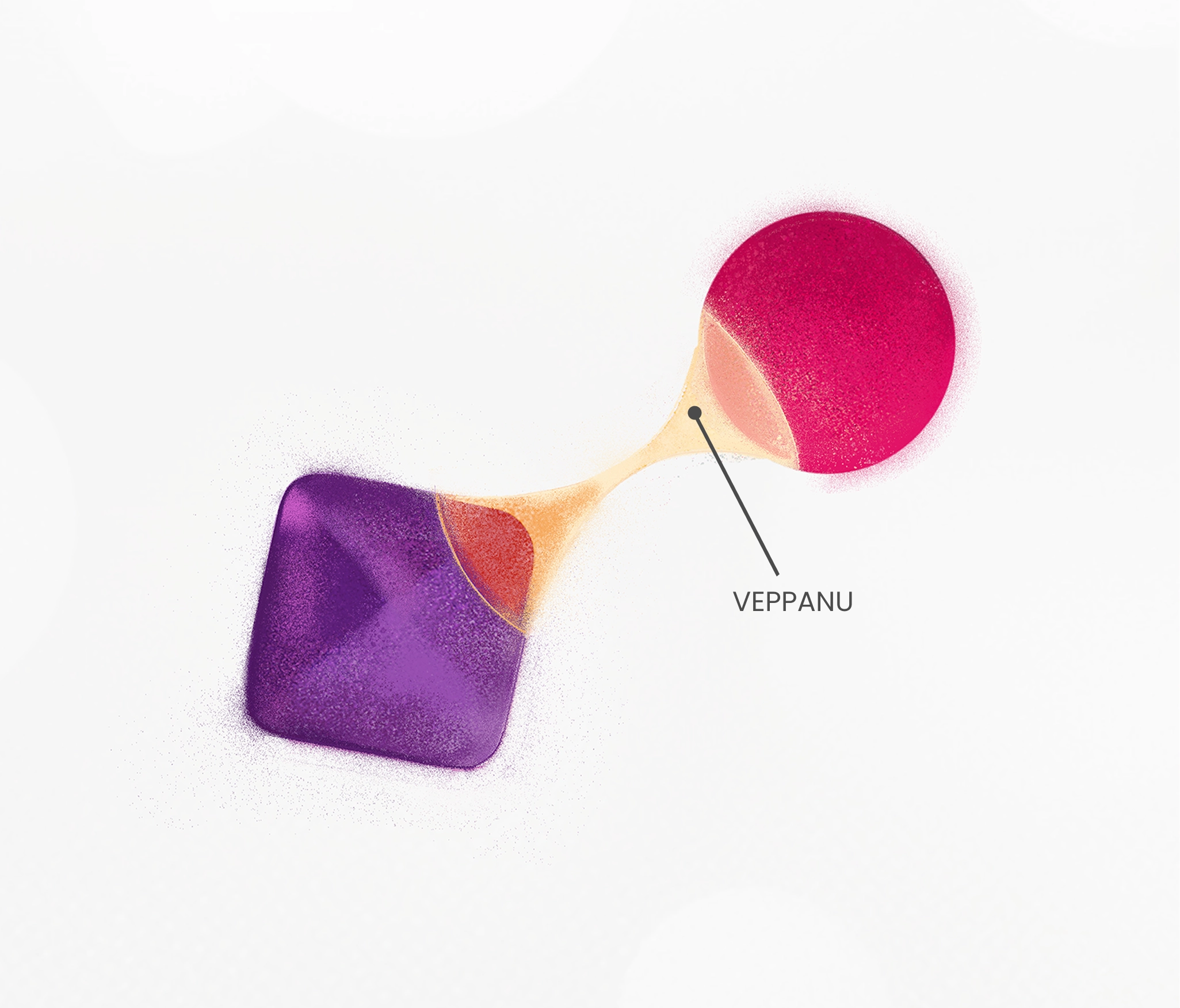
VEPPANU is not a selective estrogen receptor degrader (SERD) or chemotherapy. It is the first approved PROteolysis-TArgeting Chimera (PROTAC) within a novel drug class called heterobifunctional protein degraders. Each VEPPANU PROTAC molecule can degrade multiple ERs. This process leads to a reduction of ER levels in breast cancer cells.
How VEPPANU works in the body:
1
RECRUIT
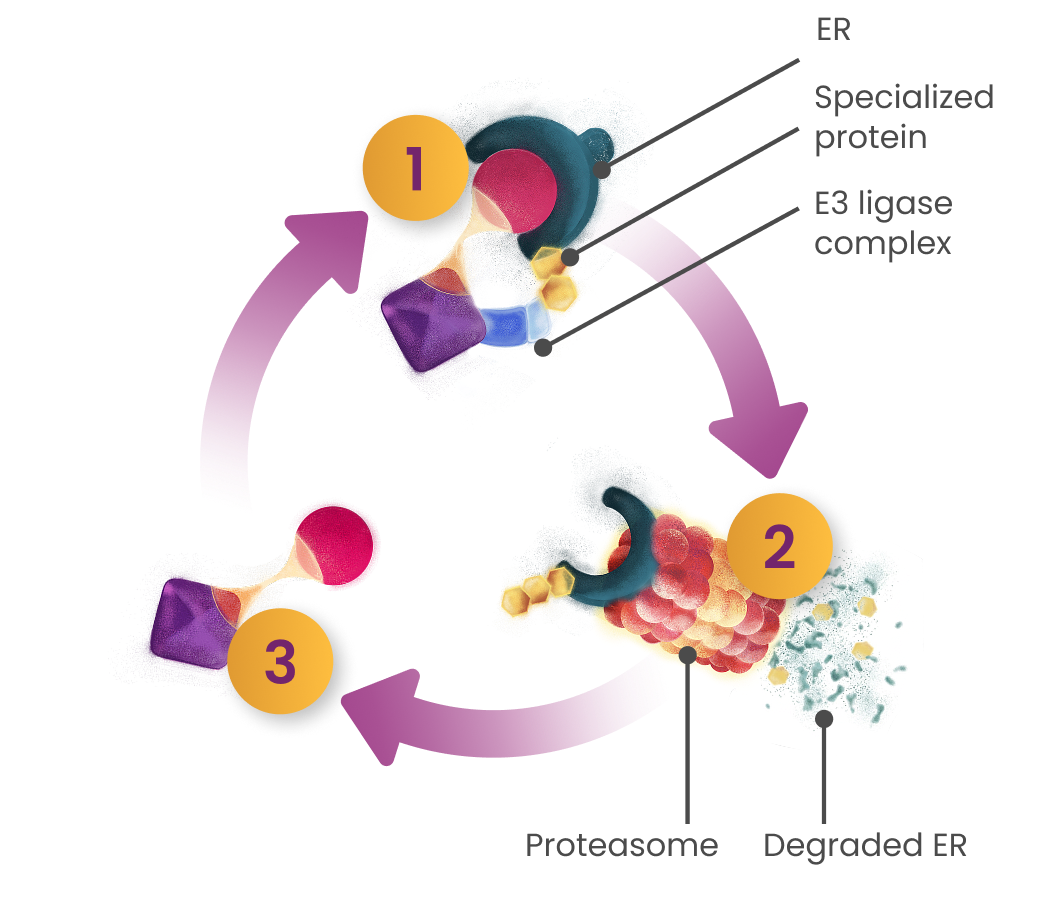
VEPPANU binds to an ER. Then it recruits the help of a protein called E3 ligase complex to tag the ER with a chain of specialized proteins, so it is recognized by the body.
1
RECRUIT
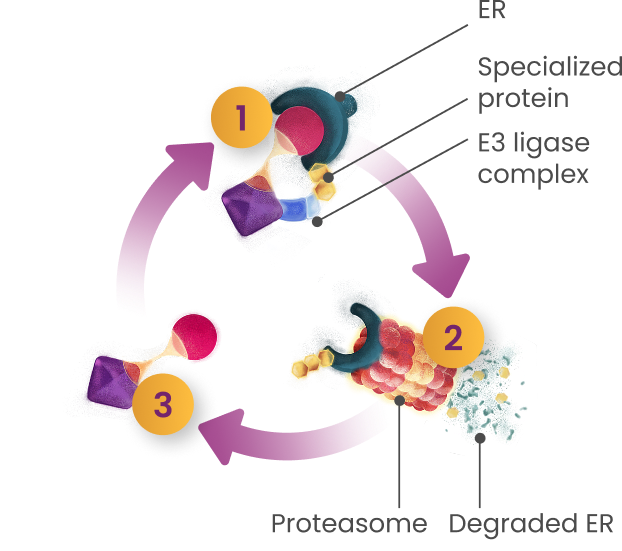
VEPPANU binds to an ER. Then it recruits the help of a protein called E3 ligase complex to tag the ER with a chain of specialized proteins, so it is recognized by the body.
2
REMOVE
The tagged ER is then removed by another part of the cells’ disposal system called the proteasome.
2
REMOVE
The tagged ER is then removed by another part of the cells’ disposal system called the proteasome.
3
REPEAT
After VEPPANU helps remove 1 estrogen receptor, it is free to do it again. It repeats these steps many times until your body breaks it down.
3
REPEAT
After VEPPANU helps remove 1 estrogen receptor, it is free to do it again. It repeats these steps many times until your body breaks it down.

In a preclinical study, VEPPANU degraded 79%-86% of the ERs.

VEPPANU was studied against fulvestrant, a common hormone therapy for mBC. See how it compared.
Explore clinical trial results
ER+=estrogen receptor-positive; ESR1=estrogen receptor 1; HER2-=human epidermal growth factor receptor 2-negative.
VEP_BC-26082