


VEPPANU can offer more time without disease progression
Explore the results
In a clinical study, VEPPANU helped people live longer without their cancer growing or spreading, also known as progression-free survival (PFS), for 2.4x longer than fulvestrant
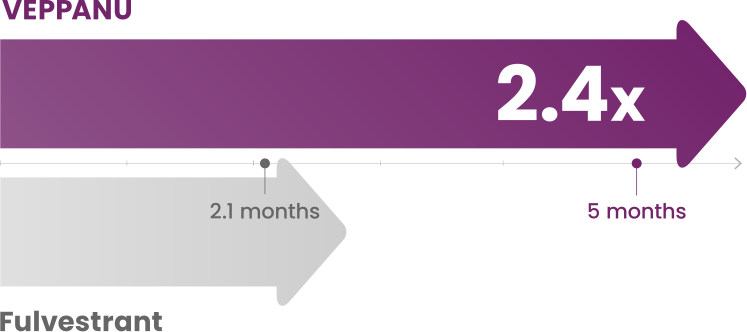
Median PFS of 5 months for VEPPANU vs 2.1 months for fulvestrant
VEPPANU significantly reduced the risk of progression or death by 43% when compared to fulvestrant

~
5
x
as many patients had tumors shrink with VEPPANU vs fulvestrant
Objective Response Rate:
19% with VEPPANU
4% with fulvestrant
Patient-reported quality of life was
studied in the VEPPANU clinical trial
Patient-reported quality of life was studied in the VEPPANU clinical trial
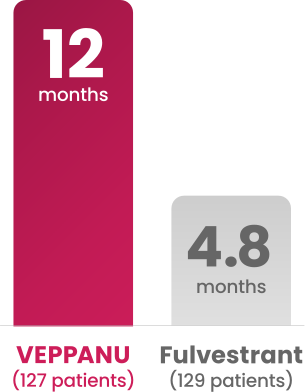


Every patient is different, and your results may vary. Interpret these findings carefully; treatment, cancer, or other factors may have affected the results, and the assessments may not have accounted for all treatment-related symptoms.
Talk with your doctor about what these findings may mean for you.

Actor portrayal.
How VEPPANU was studied
VEPPANU was studied in
270 adults living with ER+/HER2-, ESR1-mutated (ESR1m) metastatic breast cancer (mBC)
.
All participants' disease
progressed on endocrine-based therapy
, including with a CDK4/6i.

Most side effects of VEPPANU were mild to moderate in nature. See what you can expect.
View safety profile
CDK4/6i=cyclin-dependent kinase 4/6 inhibitor; ER+=estrogen receptor-positive; ESR1=estrogen receptor 1; HER2-=human epidermal growth factor receptor 2-negative.
VEP_BC-26083